From Services to a Clear Proposition: How to Position a Business
A business can offer many things and still struggle to explain its value. Explore how clear positioning connects what a business does, who it serves, and the problem it solves.

A business can grow its capabilities and still struggle to explain what it stands for.
It happens gradually. A new service is added because clients need it. Another follows because it complements the first. The website grows to accommodate each new offering. Before long, the business has a long list of things it can do, but the reason those things belong together is no longer clear.
We recognised this as we built Aganta Foundry.
We always wanted to build a studio that helped businesses develop something coherent, something that connected strategy, identity, communication, and growth. The ambition was there from the beginning. What we had not yet found was a clear way to position it.
We started with branding
Branding was our starting point. At first, the work naturally centred on helping businesses establish their identity. But branding quickly led us to questions beyond how a business should look.
What does the business stand for? Where does it want to go? Who does it serve? What makes its offer worth choosing? Do its actions support the promise it makes?
These questions reach into the business itself. A clear brand direction can inform how a company presents its products, communicates with customers, approaches sales, makes internal decisions, and delivers its services. Its vision and mission set direction. Its values establish principles for decisions and behaviour. Its positioning connects those ambitions to a specific audience and a meaningful place in the market.
Visual identity gives that thinking an expression. It does not replace the thinking.
The more we explored this wider role of branding, the more we saw how much surrounded it. A brand needed a website that explained it, content that communicated it, and ways to reach the people it was built for. So we expanded what Aganta Foundry offered.
When more services made the picture less clear
We began adding capabilities around the branding work. Each addition made sense on its own. Together, they were meant to help businesses carry their brand into the market.
But as the list grew, the way we presented the studio started to look like an agency menu: branding, design, websites, content, social media, and marketing. Visitors could see the services, but the connection between them was harder to understand.
We had become clearer about what we could deliver, without becoming clearer about the problem we were trying to solve.
A longer list of capabilities does not automatically make an offer more valuable or easier to understand.
This is a common positioning problem. Businesses often respond to growth by adding more services, features, or capabilities. Yet a longer list does not automatically make an offer more valuable or easier to understand. When every capability is presented as a separate product, the customer has to work out how they fit together and which one they need.
The more useful question is not simply, “What else can we offer?” It is, “What does the customer need to achieve, and how do our capabilities work together to help them get there?”
Position around the problem, not the list
A clear position begins with the audience and the problem. It identifies who the business is trying to serve, what those people are trying to accomplish, what gets in their way, and why this business is a relevant choice.
That position needs to be grounded in reality. A business should compare its assumptions with customer conversations, market conditions, competitors, its own strengths, and the outcomes it is equipped to deliver. It should ask whether the intended audience recognises the problem, whether the proposed difference matters, and whether the business can consistently deliver on its promise.
This is also where vision, mission, and values need to connect to practical decisions. They are not decorative statements for an About page. They should help the business decide what to prioritise, what to offer, how to communicate, and what work it should decline.
As we reconsidered Aganta Foundry, we stopped looking at our capabilities as unrelated services and started organising them around a broader purpose: helping businesses establish a clear brand and bring it into the market.
That gave us a more useful way to explain what we do.
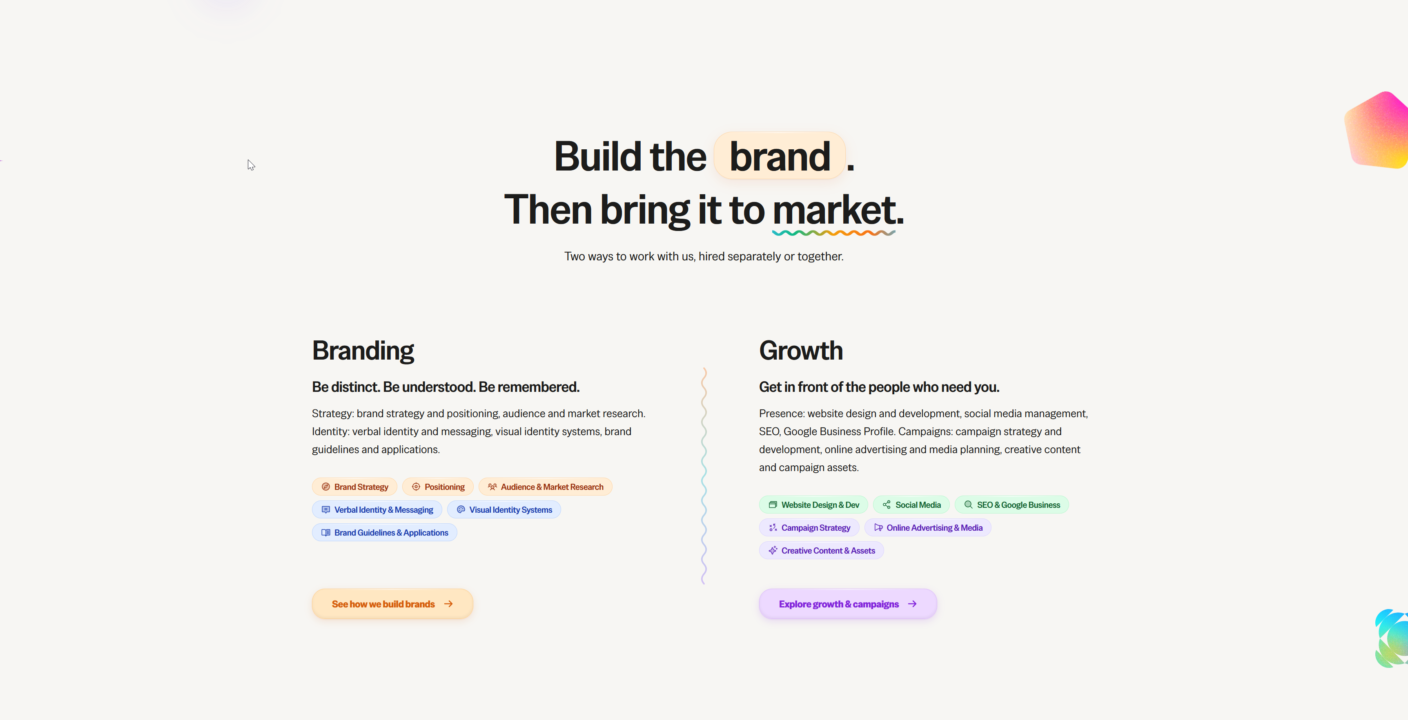
- Branding establishes the foundation through strategy, positioning, messaging, and identity.
- Growth helps carry that foundation into the market through digital presence, websites, SEO, content, social media, and campaigns.
The services remained important. Their relationship became the proposition.
Four questions to test your business position
If you suspect your business has accumulated capabilities without a clear proposition, use these four practical tests to evaluate where you stand.
- The competitor swap. If you replaced your company’s name and logo on your website with a competitor’s, would the copy still sound accurate? If the statements could describe almost anyone in your category, you are describing the industry, not your own position.
- The disqualification test. Does your positioning give you clear permission to say “no” to certain projects, clients, or requests? A position that tries to welcome everyone eventually turns every sales opportunity into an ad-hoc custom proposal.
- The customer’s vocabulary. When satisfied clients explain why they chose your business, do they describe the specific outcome they achieved, or do they simply list the deliverables you produced? If they only describe tasks, the value proposition is still undefined.
- Internal coherence. If you asked five people across leadership, sales, and delivery to describe what problem the business solves in one sentence, would the answers align? When a team lacks internal clarity, the market rarely perceives a clear message.
A strategy becomes more useful when it helps the business make clearer choices. If every opportunity still appears equally relevant, the positioning might need more work.
Make the position visible in the website
A positioning statement is only useful when it changes how the business presents itself. The website is one of the clearest places to make that happen.
The navigation should reflect how people understand the offer. Service pages should explain the problems addressed and the value delivered, not merely list tasks. The homepage should communicate the central proposition quickly. The language, imagery, and visual system should reinforce the same idea rather than introduce competing messages.
Moving from a menu to a narrative
Compare two common ways a studio presents its capabilities:
- Organised as a service menu: The navigation lists ten disconnected capabilities: Identity, UI Design, Development, SEO, Copywriting, Social Campaigns. The visitor is left to assemble their own solution from fragmented parts.
- Organised around customer outcomes: The structure guides visitors through how the work connects: first establishing a clear brand foundation, then building momentum in the market with sustained visibility.
This became the thinking behind Aganta Foundry’s website redesign. We organised the offer around Branding and Growth, made the relationship between them easier to understand, and developed the visual experience to express a more considered studio with a clearer point of view.
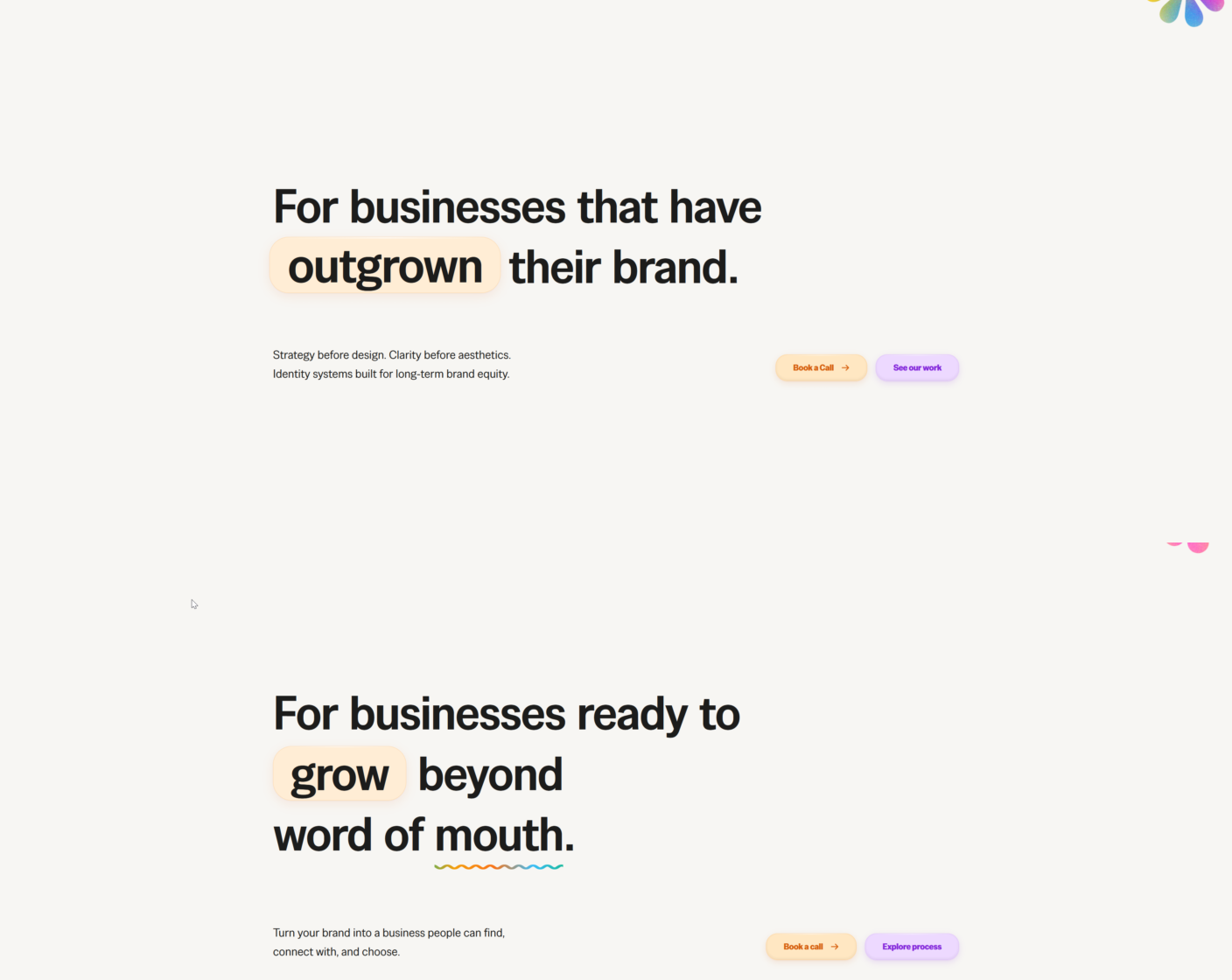
The redesign was not the starting point of the change. It was the expression of decisions made before the design: what the studio wanted to stand for, whom it wanted to serve, and how its capabilities created value together.
A clearer proposition gives the business direction
Positioning does not mean reducing a business to one service or refusing work outside a narrow category. It means giving people a clear reason to understand the business, remember it, and choose it.
When the position is clear, decisions become easier to evaluate. New services can be judged by whether they strengthen the proposition. Marketing has a more consistent message. Sales conversations have a clearer value to communicate. The website has a structure built around the customer rather than the organisation’s internal list of capabilities.
That is what we were looking for at Aganta Foundry. We did not set out to become something entirely different. We needed a clearer direction for the studio we had always intended to build.
A business should not be organised around everything it can do. It should be organised around the problem it exists to solve and the value it creates.
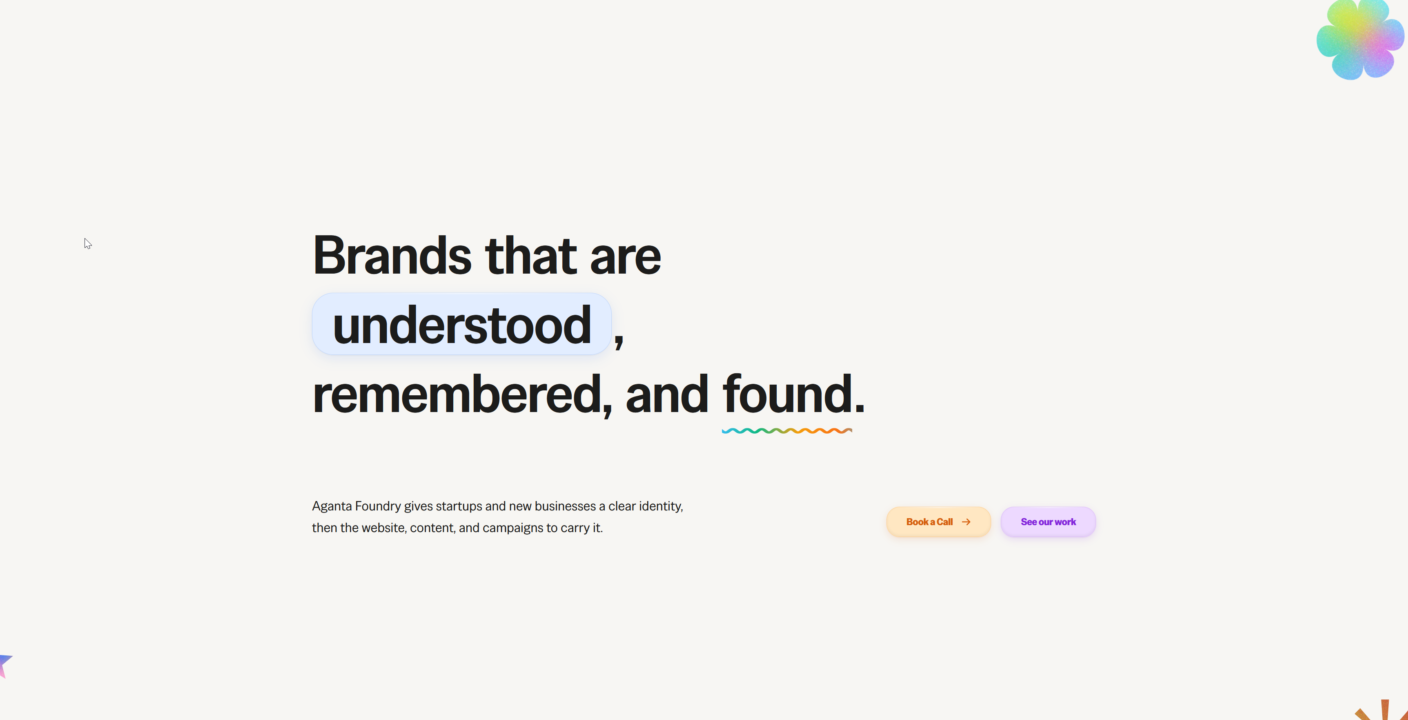
That is the thinking behind Aganta Foundry’s current direction: brands that are understood, remembered, and found.
Explore Branding and Growth to see how that thinking translates into our work.
Tell us what you're building.
Book a Call. We'll look at where your brand is now and what it needs next.
Book a Call