WTF Is Branding? A Beginner’s Guide to Branding Fundamentals

Why branding feels confusing at the beginning
If you search for branding online, you will find thousands of articles. Most of them talk about logos, colors, fonts, or marketing tactics. While none of those are wrong, they create a misleading starting point.
Most people encounter branding visually first. A logo on a website. A color palette on Instagram. A typeface on packaging. Because of this, branding is often misunderstood as something that begins and ends with design assets.
That misunderstanding is where most brand problems begin.
Branding is not the act of creating visuals. Branding is the act of making decisions and then repeating those decisions consistently across time, mediums, and situations. Visual design is one expression of that system, not the system itself.
This article exists to reset expectations. Not to teach tools, trends, or tactics, but to explain what branding actually is before you design anything.
What branding really is
At its core, branding is a system of choices.
Those choices answer fundamental questions:
- What do we stand for?
- Who is this for, and who is it not for?
- What should people consistently feel when they encounter us?
- What remains the same when platforms, formats, or trends change?
A brand is not what you say once. A brand is what people recognize after repeated exposure. When someone can identify you without seeing your logo, your branding is doing its job.
The difference between a product, a brand, and branding
This distinction is where many explanations fall apart.
| Concept | What it is | What it is not |
|---|---|---|
| Product | What you sell. A tangible or intangible offering. | A source of long-term differentiation |
| Brand | The perception people form over time. | A logo or slogan |
| Branding | The deliberate work of shaping perception through consistency. | A one-time design exercise |
Two businesses can sell nearly identical products, yet be valued very differently. The difference is rarely the product itself. It is the meaning attached to it.
Branding is not your logo
Logos matter, but they are not the brand.
A logo is a symbol. It helps people recognize and locate a brand quickly, but it does not carry meaning on its own. Meaning is built through consistent behavior, messaging, and experience.
This is why strong brands can simplify, redesign, or even temporarily remove their logos without losing recognition. The system behind the symbol is already doing the work.
If a brand collapses when the logo changes, the branding was never strong to begin with.
Branding lives in consistency, not creativity
Beginners often assume branding is about being endlessly creative. In practice, branding is about restraint.
Creativity generates options. Branding decides which options are allowed to survive.
Consistency does not mean repeating the same thing without thought. It means making clear decisions and honoring them even when novelty feels tempting. Many brands weaken as they grow because they mistake change for progress and lose coherence in the process.
Strong branding is recognizable because it is disciplined.
Why branding takes time
Branding does not work instantly because recognition does not happen instantly.
A brand is built through repeated exposure across moments that may seem insignificant on their own. A website visit. A social post. A customer interaction. An email. Over time, these moments accumulate into familiarity.
This is also why shortcuts rarely work. You cannot rush trust or recognition. Branding rewards patience more than intensity.
Branding as a system, not a set of assets
Strong brands are designed as systems, not collections of individual assets.
A system exists to create alignment when decisions are repeated by different people, across different contexts, over long periods of time.
| System layer | Purpose |
|---|---|
| Fixed | Protects recognition and identity |
| Flexible | Allows adaptation across platforms and formats |
| Guiding rules | Enables consistent decisions without oversight |
Colors, typography, layouts, imagery, and language are tools inside this system. Without a system, assets drift. With a system, evolution becomes possible without erosion.
This is why brands that scale successfully feel coherent even as they change.
Brand pillars: the foundation beneath the system
Before visuals or messaging are defined, strong brands are anchored by a small set of core pillars.
| Pillar | Role |
|---|---|
| Purpose | Why the brand exists beyond profit |
| Vision | The future the brand is working toward |
| Values | Principles that guide decisions and behavior |
These pillars act as a filter. Decisions that align with them strengthen the brand. Decisions that don’t slowly erode it. Without clear pillars, consistency becomes guesswork.
Brand personality and positioning
If brand pillars define what a brand believes, personality defines how it behaves.
| Element | Defines |
|---|---|
| Personality | Tone, attitude, and behavioral style |
| Positioning | The space the brand chooses to own relative to competitors |
Without clear personality and positioning, brands default to imitation. With them, differentiation becomes natural.
The visuals that matter most
Visual identity is where branding becomes tangible, but not all visuals carry equal weight.
| Visual element | Why it matters |
|---|---|
| Color systems | Drive recognition across screen and print |
| Typography | Maintains readability and brand voice at scale |
| Layout principles | Creates familiarity even as content changes |
| Imagery style | Reinforces tone instead of decorating |
These visuals work best when treated as rules, not decorations. Their role is coherence, not novelty.
The role of design in branding
Design translates brand decisions into visible and tangible form.
Good design does not invent the brand. It clarifies it. When design feels inconsistent or confusing, it is usually because the underlying brand decisions were never fully made.
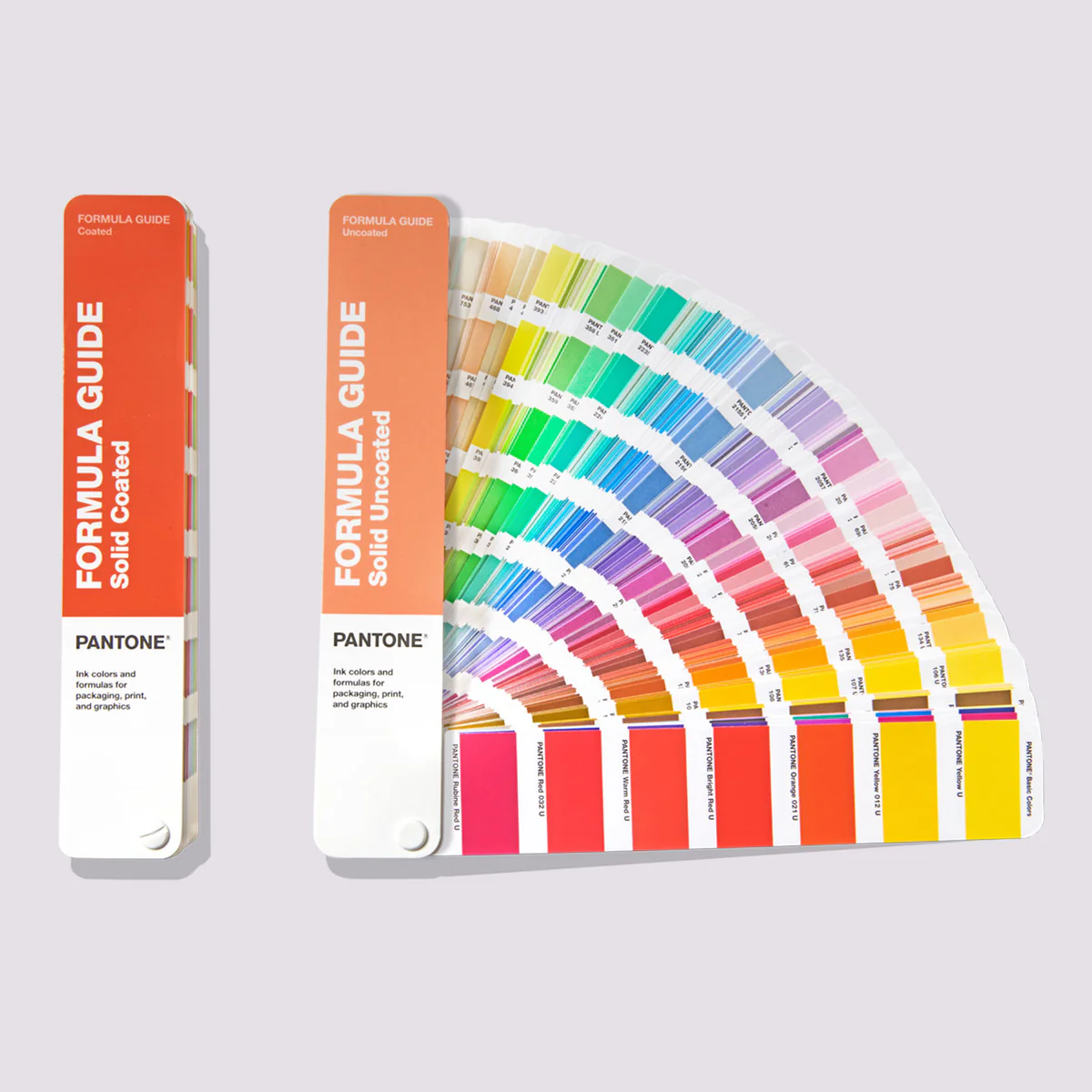
This becomes especially clear when brand systems meet real-world constraints like screens, print, and materials. Color systems, for example, behave differently depending on medium. A color that feels vibrant on a screen may behave very differently in print, which is why understanding systems like RGB, CMYK, and standardized color references matters.
Branding problems cannot be fixed by redesigns alone. A new logo cannot compensate for unclear positioning or inconsistent behavior. Strong branding requires understanding how design decisions translate across contexts, not just how they look in isolation.
Branding in the real world
Branding does not exist in ideal conditions.
Budgets, timelines, platforms, materials, and people all shape how a brand shows up. Strong branding systems anticipate this reality. They are built to survive imperfect execution.
If a brand only works when everything is controlled, it is fragile.
What beginners should focus on first
Before choosing colors or designing logos, beginners should focus on clarity.
Clarity around:
- Purpose
- Audience
- Boundaries
- Long-term use
Once these are defined, visual decisions become easier and more meaningful. Design becomes an expression of understanding rather than decoration.
The long view
Branding is not a launch moment. It is a long-term discipline.
The most effective brands are rarely the loudest or most complex. They are the ones that remain coherent as they grow, adapt, and repeat.
Understanding branding this way shifts the goal. Instead of trying to impress quickly, you begin designing for durability.
That shift is where real branding begins.